Sits at a higher price point
Construction, fabric and finishing put a jersey in a different bracket from a printed tee. That changes what the product can return per unit sold and it changes how the range is priced around it.

Festival merchandise
We design, develop and manufacture fully custom football shirts for festivals, artists, sponsors and event merchandise programmes.
From a guided 50-piece release to a production programme of 10,000 units and beyond, one team takes the project from first idea to delivered stock.
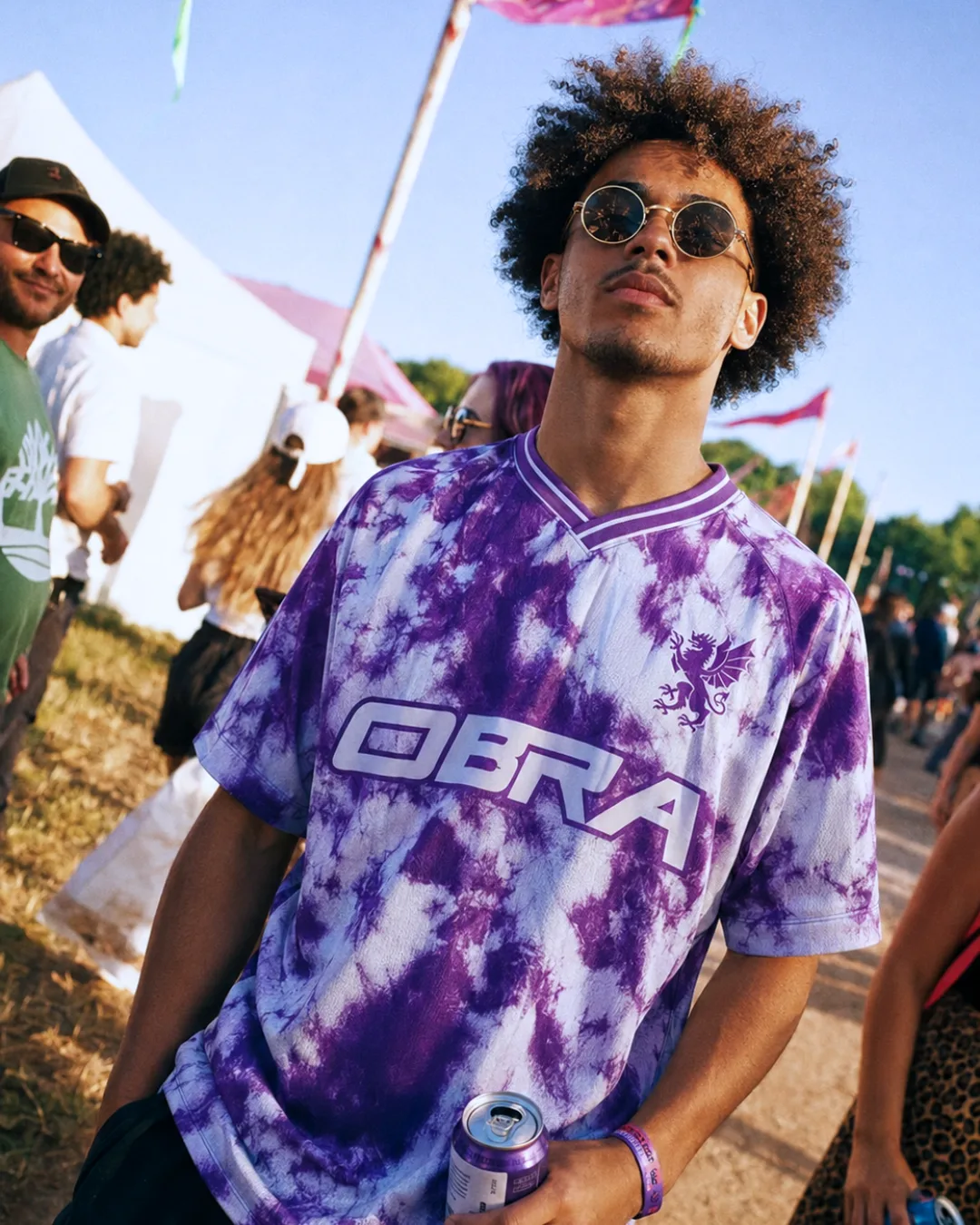
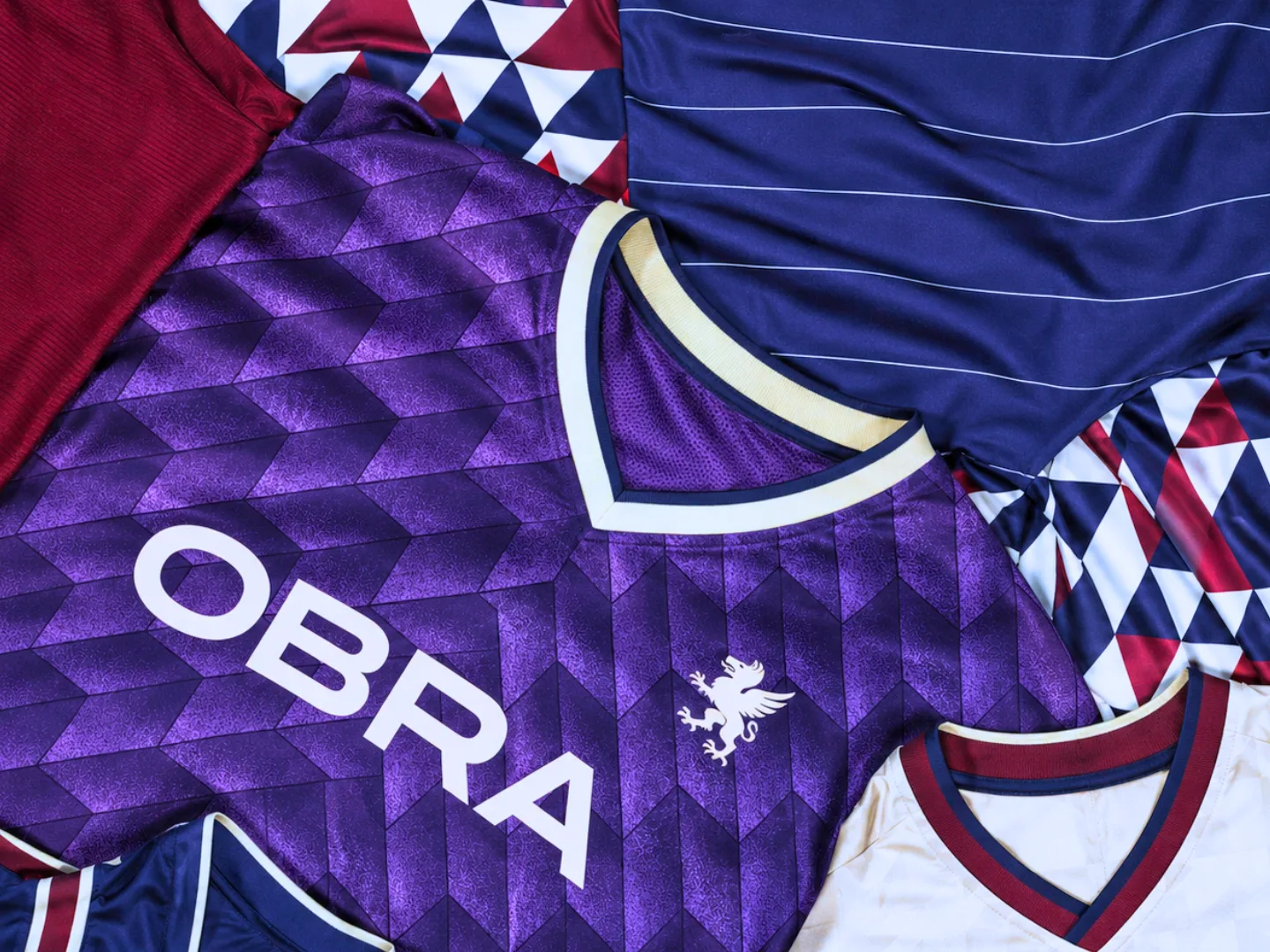
Why the product works
A football shirt behaves differently from the rest of a merchandise range. It carries a higher perceived value, so it can hold a higher retail price. It has a natural place for sponsor branding that does not look bolted on. And it gets worn long after the weekend, in places where a printed tee would not go.
Festivals have already proved the format. Shirts released with Glastonbury, Tramlines, Truck and Y Not have shown that an audience will treat an event jersey as a collectable rather than a souvenir.
Construction, fabric and finishing put a jersey in a different bracket from a printed tee. That changes what the product can return per unit sold and it changes how the range is priced around it.
Front, sleeve, back and short placements are part of how the garment is designed, not an afterthought. Sponsor and partner branding reads as intentional because the format expects it.
A festival shirt goes to the pub, the match, the next festival. The event keeps travelling on the back of the person wearing it, which is worth more than a bag that stays in a cupboard.
Numbered runs, year-dated designs and single-edition drops create a reason to buy this year and again next year. Scarcity is a design decision, made at the point the quantity is set.
Shirts shoot well flat, on a rail, on a person and in a crowd. That gives the marketing team assets for the announcement, the pre-sale, the weekend itself and the post-event recap.
Stage identities, artist collaborations, crew versions, sponsor editions and home and away colourways all sit naturally within one format. One product idea can carry a full range.
A jersey costs more to produce than a printed tee. It should be planned as the anchor product in a range rather than the volume product. We will tell you if it is the wrong choice for the audience.
Who we work with
Most festival merchandise projects have three people pulling in different directions. Someone is responsible for the revenue. Someone is protecting the creative direction. Someone has to get the boxes on site before gates open. OBRA works as one production partner across all three.
You need a product that sells through at a sensible margin, a quantity that does not leave you holding stock in October and a size split that does not run out of larges on day one. We help set the numbers before anything goes into production.
You need the shirt to look like the event, not like a template with a logo on it. Design, artwork direction, colour, trims and labels are all developed for the project. Nothing is chosen from a catalogue.
You need dates that hold, a sample you have signed off and one person to ask when something changes. Approvals happen on a schedule and production runs against an agreed critical path.
We also work behind the scenes for creative, merchandise and event agencies delivering festival jersey projects for their own clients.
The process
You do not need artwork files, factory specifications or manufacturing experience to start. An idea, an audience and a date are enough.
01
We agree the audience, the quantity, the sales route, the target delivery date and the creative direction before any product work begins. Getting this right is what stops the project changing shape halfway through.
02
We turn the idea into a complete jersey concept built around the festival, the artist or the campaign. You see mockups, not mood boards.
03
We specify fabric, fit, construction, collar, trims and labels, then produce the technical pack the factory manufactures from. This is the stage most merchandise projects skip and the reason most of them arrive wrong.
04
Design, artwork and specification are signed off in writing at set points. Nobody discovers a change after production has started.
05
You hold the finished product and approve it before bulk manufacturing begins. If something needs to change, it changes now.
06
Manufacturing runs against an agreed critical path. We manage the factory communication so you are not chasing it.
07
Product is checked against the approved sample before it leaves the factory. Colour, print, construction, labelling and packing.
08
We manage the route from production to your delivery address, including split deliveries and international freight where the project needs it.
Product development
Every OBRA jersey is developed from scratch. There is no template, no fixed catalogue and no standard body that gets a new print applied to it. What follows is the range of decisions available, not a list of things you have to specify.
Performance fabrics for a lighter, technical feel. Heavier lifestyle weights for a retail garment that hangs properly. Custom fit and body shape. Fabric weight and texture developed to the project at higher volumes.
Collar development, including ribbed collars and cuffs. Custom colours matched to the event palette. Sublimated all-over graphics. Embroidery. Woven badges. Sponsor and partner placements positioned as part of the design.
Custom woven neck labels. Branded trims and tapes. Swing tags. Retail care and composition labels. Everything that separates a product from merchandise.
Custom packaging. Retail-ready presentation for a merchandise stand or an online store. Multiple colourways. Multiple designs across one release. Custom jacquard where the quantity supports it.
Not every option makes sense at every quantity. Custom jacquard, developed fabrics and bespoke trims need volume behind them to be worth doing. At 50 or 100 units we will steer you towards the decisions that make the biggest difference to the finished product and leave the rest for when the numbers support it.
Production levels
Five production levels, set by quantity. Every project is quoted individually, because cost depends on the quantity, the design, the fabric, the construction, the trims, the packaging, the sampling and where it needs to be delivered.
You do not need to pick one now. If you are not sure, start a brief and we will tell you which level fits.
From 50 units
For first launches and limited releases that need hands-on guidance.
From 100 units
For commercial festival merchandise releases that need more product choice and stronger production pricing.
From 500 units
For campaigns, collections and multi-design festival releases.
From 1,000 units
For major events, established festival brands and retail-ready collections.
From 2,500 to 10,000+ units
For festival groups, large-scale campaigns and ongoing merchandise programmes.
Tell us the event, the audience size and the date. We will recommend a starting quantity and a production route.
Timeline
Festival merchandise has one deadline that does not move. Everything else has to be planned back from it.
The OBRA process runs to an indicative nine-week route from brief to delivery.
01
Brief
Week 1
02
Design
Week 2
03
Approvals
Week 3
04
Sampling
Week 4
05
Production
Week 6
06
Delivery
Week 9
That route is a starting point, not a promise. The final timeline depends on:
Approval speed is the variable most within your control and the one that most often moves a delivery date. A week spent waiting for a sponsor sign-off is a week taken from production.
We build sensible buffers into each stage so the decisions that matter, artwork approval, sample review and final quality checks, are not compressed into the last fortnight. If a date cannot be met safely, we will say so at the brief stage rather than at the production stage.
Check your project timelineCommercial planning
The quantity question is the one that stalls most festival merchandise projects. Order too few and you sell out on Friday afternoon with two days left. Order too many and the margin sits in a storage unit until next summer.
There is no universal formula and anyone offering one is guessing. What we can do is work through the variables with you before the number gets committed.
| Input | Why it changes the number |
|---|---|
| Capacity and number of days | Sets the ceiling on footfall past the stand |
| Previous merchandise performance | The most reliable predictor you have, if it exists |
| Sales channels in play | Pre-event online, on-site, post-event, or all three |
| Audience profile | Buying behaviour varies enormously by genre and age |
| Retail price | Sets both the margin and the realistic conversion rate |
| Artist and sponsor allocations | Units committed before a single one is sold |
| Number of designs | Splits the same demand across more SKUs |
| Size curve | Wrong split loses sales even when total stock is right |
Bring whatever numbers you have, including none. We will help you establish a starting quantity and a production structure that can scale if the release performs.
Why OBRA
Most festival merchandise problems are handover problems. The designer does not know what the factory can produce. The factory builds what the file says rather than what was intended. Nobody owns the gap. OBRA holds design, development and production together so the gap does not exist.
The people designing the shirt understand what the factory can make. Specification decisions get taken with production reality in the room.
Tech packs, fabric specification, construction detail and trim sourcing are part of the service, not a separate cost or your responsibility.
Nothing goes into full production until you have approved a physical sample. This is the single biggest protection against an expensive mistake.
Set stages, in writing. You know what you are signing off and when and so does the factory.
The same process runs at both ends. A first release gets the same development discipline as a retail programme.
Product decisions come from the project, the audience and the budget. We recommend the specification that suits the release, including the cheaper option when it is the right one.
Fifty units, through our Concept Release. That covers a fully custom design, a pre-production sample and complete production management. Most festival merchandise releases sit at 100 units or above, where the production cost per unit improves and more fabric and construction options open up.
We can create it. Most projects arrive as an idea, a set of brand assets and a rough direction. We handle design, artwork direction and the technical work needed to manufacture it. If you have a designer or an in-house creative team, we work alongside them and take their artwork through to production.
No. No technical files, tech packs or factory specifications are required. That work is part of what we do.
Yes, on every project including 50-unit releases. A pre-production sample is manufactured and approved before bulk production begins. If something needs changing, it changes at that point rather than after 500 units exist.
Our indicative route is nine weeks from brief to delivery, with sampling around week four and production starting around week six. The real figure depends on quantity, construction, how many designs are in the release, packaging, delivery destination and how quickly approvals come back. If your date is tight we will tell you at the brief stage whether it is achievable.
Yes. Multiple designs and colourways are supported from the Edition Release upwards and are common for festivals running stage identities, artist collaborations, crew shirts or sponsor editions. At lower quantities, splitting across designs also splits your stock, so we will talk through whether one strong design serves the release better.
Yes. Front, sleeve, back and short placements are all available and sponsor integration is one of the reasons the format works for festivals. Bring the sponsor's brand guidelines and approval process into the brief early, because sponsor sign-off is one of the most common causes of delay.
Lightweight performance fabrics for a technical feel and heavier lifestyle weights for a retail garment with more structure. Choice widens with quantity. At Major Release and above, custom fabric weights, textures and finishes can be developed for the project. We will recommend based on the price point, the audience and how the shirt is meant to feel.
Yes. Collar development, ribbed collars and cuffs, custom colours, woven badges, embroidery, branded tapes and trims are all part of the development stage rather than optional extras chosen from a list.
Yes. Custom woven neck labels, swing tags, retail care labels and custom packaging are all available. Retail-ready finishing matters if the shirt is going onto a rail or into an online store alongside other products.
Yes. Our Volume Programme runs from 2,500 to 10,000 units and above, with reserved manufacturing capacity, staggered production, multiple delivery destinations and a dedicated production lead. Multiple designs and multiple collections within one programme are supported.
Yes. We are based in the UK and manage international freight and multi-destination delivery. Tell us the delivery country and date at the brief stage, because freight route and customs handling affect the critical path.
Every project is quoted individually because the cost drivers change with every release. The main ones are quantity, design complexity, fabric, construction, labels and trims, packaging, sampling requirements, delivery destination and timeline. A 500-unit single-design release and a 500-unit three-design release with custom packaging are different products at different costs. Send a brief with an approximate quantity and target date and you will get a real number rather than a range that means nothing.
Very little. The event or project name, roughly who it is for, an approximate quantity if you have one and your target delivery date. Everything else, including the design, the specification and the final quantity, gets worked out together.
You do not need the design finished, the quantity confirmed or the budget signed off to start a conversation.
Tell us what you are creating, who it is for, roughly how many and when you need it on site. We will come back with the right specification, a realistic quantity and a production route that works to your date.
Prefer email? hello@madebyobra.com
No technical files are required to start. If you do not know the quantity or the specification yet, say so in the brief.